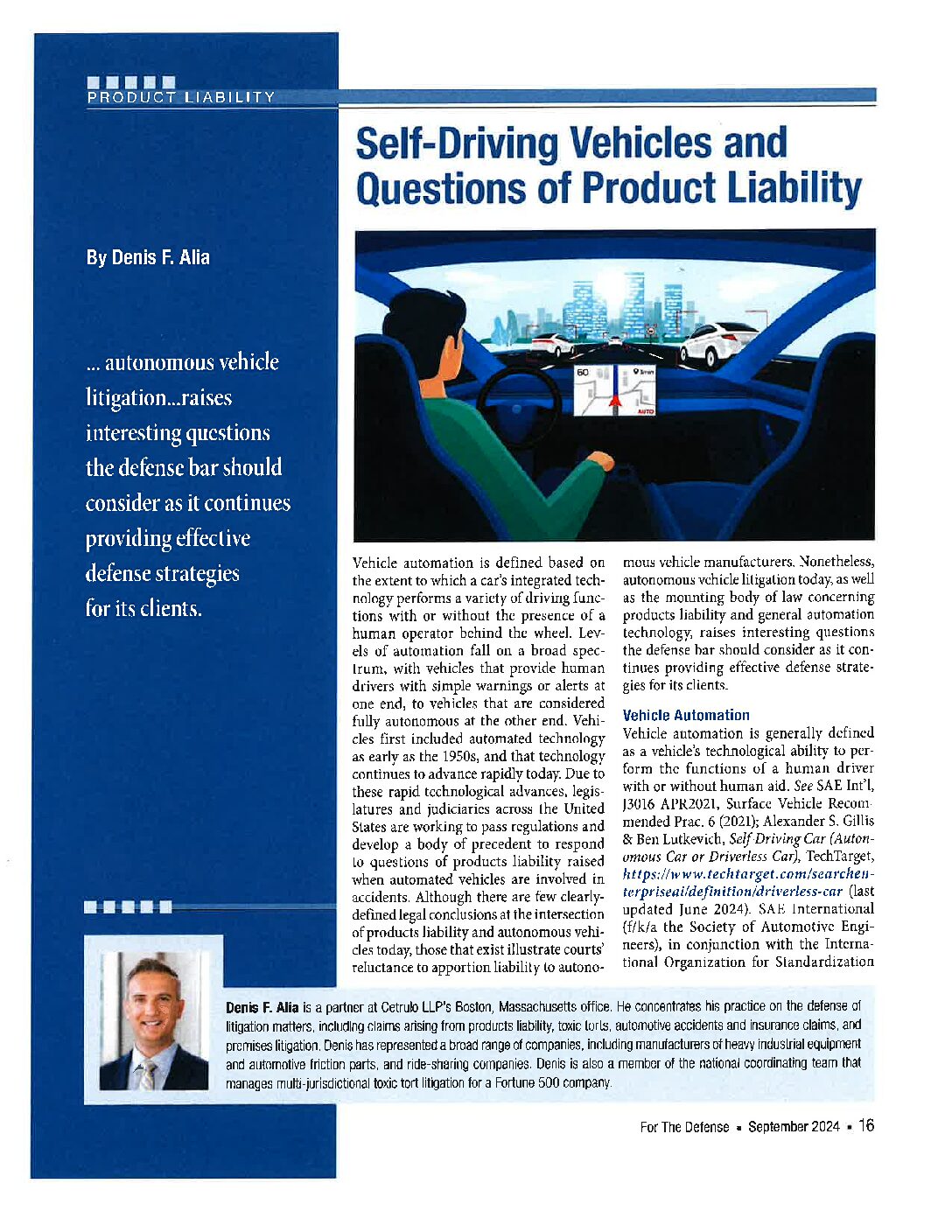
Denis F. Alia of Cetrulo LLP published an article on self-driving vehicles and implications for product liability in DRI’s “For the Defense” flagship magazine. Vehicle automation is defined based on the extent to which a car’s integrated technology performs a variety of driving functions with or without the presence of a human operator behind the wheel. Levels of automation fall on a broad spectrum, with vehicles that provide human drivers with simple warnings or alerts at one end, to vehicles that are considered fully autonomous at the other end. Vehicles first included automated technology as early as the 1950s, and that technology continues to advance rapidly today.
Due to these rapid technological advances, legislatures and judiciaries across the United States are working to pass regulations and develop a body of precedent to respond to questions of products liability raised when automated vehicles are involved in accidents. Although there are few clearly defined legal conclusions at the intersection of products liability and autonomous vehicles today, those that exist illustrate courts’ reluctance to apportion liability to autonomous vehicle manufacturers. Nonetheless, autonomous vehicle litigation today, as well as the mounting body of law concerning products liability and general automation technology, raises interesting questions the defense bar should consider as it continues providing effective defense strategies for its client
Up Next...